
News from Italy
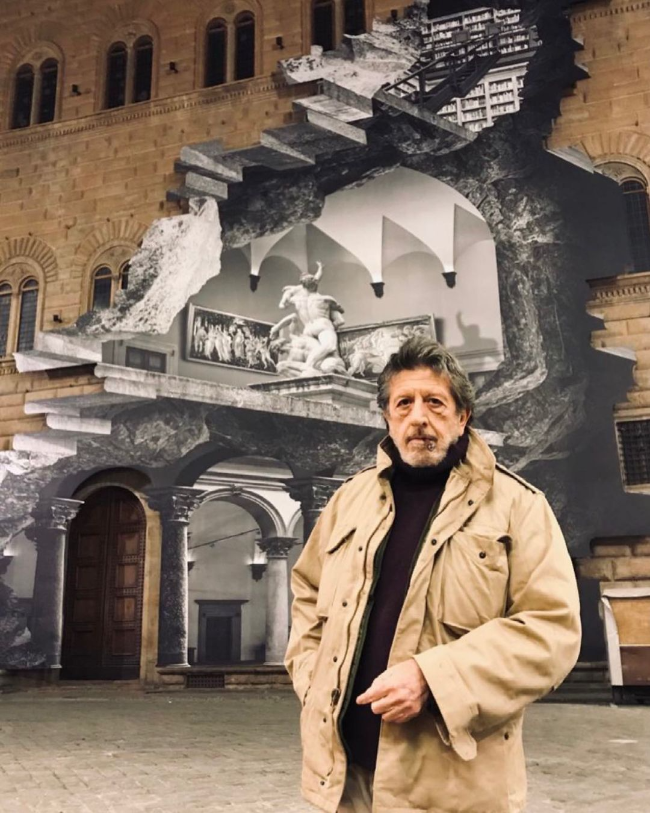
Andrea Purgatori died
Vita gazette – The journalist, author and screenwriter Andrea Purgatori has died. He died this morning in Rome in hospital after a brief fulminating illness.
Andrea Purgatori, journalist, author and, writer, host of successful television programs, died at 70. A fulminant illness killed him after a brief hospitalisation in Rome.
The news from their children Edoardo, Ludovico, Victoria and the family represented by the Cau law firm. Andrea has worked for print media and television. For years at Corriere della Sera, where he dealt with terrorism, intelligence, and crime, he dedicated tenacity to the Ustica massacre in 1980. Author of reports, he successfully presented Atlantis on La7. Screenplay teacher, and adviser to the authors, among his latest works, he participation in the document Vatican Girl on the case of Emanuela Orlandi.
Purgatori arrived at the cinema in 1991, writing the film “The rubber wall”, a reconstruction of the journalistic investigation he had conducted on the Ustica massacre. He has appeared as an actor in several episodes of the television series Boris, in Carlo Verdone’s films “Posti pendiente in Paradiso” and “L’chiamo Grossa” and in Alessandro Aronadio’s films “Due vite per caso” and “Orecchie” as well as in the television series 1993. In the autumn of 2022, he was the protagonist of the Netflix docu-series Vatican Girl: the disappearance of Emanuela Orlandi.
He became a professional journalist in 1974 and six years later earned a master’s degree in Science in Journalism from Columbia University in New York.
Correspondent of the Corriere della Sera from 1976 to 2000, he was known for his investigations and reports on burning cases of international and Italian terrorism in the “years of lead” and on massacres, such as the Moro case and, precisely, the Ustica massacre.
He recounted numerous mafia crimes from 1982 until the capture of Totò Riina. He has reported on many conflicts, such as the 1982 Lebanon War, the 1980s Iran-Iraq War, the 1991 Gulf War, the Intifada, and the uprisings in Tunisia and Algeria.
He has also written for l’Unità, Vanity Fair, The Huffington Post and Le Monde diplomatique. He was the author and presenter of ‘Uno di Note (Rai 1, 1999). He has made television reports for Dossier, Spazio Sette, and Focus (Rai 2 1978/1988) and conducted Confini on video (Rai 3, 1996).
For nonfiction, he wrote “One step away from War” (1995), “The Beauty of Anger” (1997) and “The Secrets of Abu Omar” (2008). In 2019 he published his first novel: “Four Little Oysters” (published by HarperCollins).
For the cinema, he wrote, among other things, “The boy judge” (1994) and “The Industrialist” (2011). Among others, he obtained the 1992 Silver Ribbon for best story with The rubber wall, the Hemingway Prize for Journalism in 1993, the Crocodile – Altiero Spinelli Prize for Journalism in 1992, the 1994 Golden Globe for the best screenplay with The judge boy and in 2009, with Marco Risi and Jim Carrington, he won the Sergio Amidei award for best international screenplay with the film Fortapàsc.
In 1987, in addition to participating in the subject and screenplay of the film Spectre, he appeared as an “actor”. Friend of Corrado Guzzanti and his co-author, in 2002, he participated in the television program Il caso Scafroglia (Rai Tre), interpreting the off-screen voice that converses with the conductor, while in 2006, he took part in the film Fascisti su Marte in the role of comrade Fecchia and, again with Guzzanti, he created Aniene (Sky Uno). He was co-author of Antonio Albanese’s television program Non c’è problema (Rai Tre, 2002).
In 2006 he wrote with Francesco Nicolini the six monologues by Marco Paolini for Teatro Civile (Rai Tre).
From the 2017-2018 television season, he hosted the new edition of Atlantis on LA7.
Share: