
News from Italy
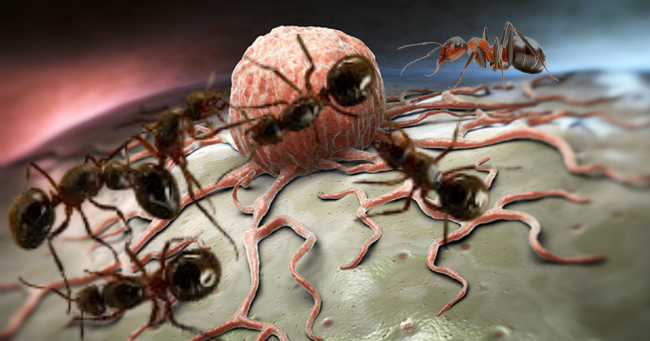
Detector ants that can sniff out cancer
Vita gazette – It is no longer a dream for ants to save lives by acting as natural detectors. Scientists have discovered that ants can smell cancer in their urine. A new proof-of-concept study has shown that this skill could be harnessed to detect cancers, in urine samples, at least from laboratory mice.
Cancer remains the leading cause of death worldwide, with more than 19 million cases in 2020. The earlier cancer is detected, the higher the chances patients can recover. Still, current detection methods are invasive or expensive, which may deter patients from undergoing screenings as early as they could otherwise be. “Ants show the potential to become a fast, efficient, inexpensive and non-invasive tool for detection of human tumours, “Sorbonne University ethnologist Baptiste Piqueret and colleagues write in their paper.
Piqueret and the team have put ants to the test, too. They conditioned 35 silky ants to associate healthy mouse urine with a sugar-water reward and another 35 to associate the urine smell from mice carrying human cancer tumours. It took only three training sessions for the ants to discriminate between odours. These ants are known for their fast learning and memory retention; they can be tested nine times without a reward before their responses fade. In their previous study, the researchers found ants can distinguish between cancerous and healthy cell samples and different types of cancer cells.
Once trained, the ants spent around 20 per cent more time near the target odour than others, looking for that sugary reward and incidentally providing a clear and accurate signal of the presence or absence of breast cancer in the mouse urine.
This was even though the cancer biomarkers from the grafted human tumour were potentially altered while passing through the mouse’s body and mixed in with other scents within the mouse’s urine. Chemical analysis confirmed that the smelly volatile molecules in the urine of the mice with cancer are different from those without. What’s more, the larger the cancer tumour, the more different the odours are.
Yet the ants showed no difference in their ability to detect the presence of small tumours compared to large tumours in the mice; they could sniff out large and small tumours from cancer-free controls just the same.
While these results are promising, there’s still more work before any potential use in clinical settings.
“A limitation of our study is that the odours we used may not represent the wide diversity of cancer odours that exists in nature,” the team writes.
“In a real-life situation, confounding factors such as age, diet, condition, or stress may contribute to the inter-individual variability of individual body odours. Our method needs further validations using different tumours/cancer types and, most crucially, samples of natural human origins before being considered suitable as a routine test for cancer screening.”
Share: