
News from Italy

There is love in the air!
Valentine’s Day: the day of lovers… The story…
by Isabella Laiden
“Love comforteth like sunshine after rain -Venus and Adonis, line 799” Shakespeare…
On February 14, when we share chocolates, special dinners, or doily cards with our loved ones, we do it in honour of Saint Valentine. But who was this saint of romance?
On this day when lovebirds dance in the sky with roses, heart-shaped chocolates and colourful postcards, shall we take a journey back to the time when Valentine was born? Come on, here we go…
The origin of this day is still being determined. Some say that the history of Valentine’s Day can be traced to the ancient Roman festival of Lupercalia. Others say it is rooted in the history of Saint Valentine himself. The evidence indicates that the origins of Valentine’s Day are more likely tied to a 14th-century poem by Geoffrey Chaucer than to a 3rd-century Christian saint.
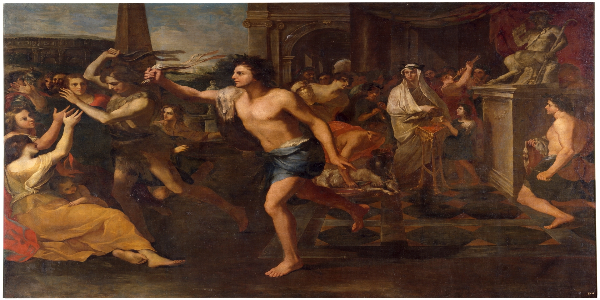
Saint Valentine’s Day and Roman Lupercalia celebration
Lupercalia was a pagan fertility festival dedicated to Faunus, the Roman god of agriculture. The festival was held on February 15 and featured several peculiar rituals. The celebration commenced with the sacrifice of goats (and sometimes dogs) before the Luperci (priests of Lupercus) ran around the Palatine Hill half-naked, striking women with trips of flayed hide. Bizarre as it may seem, the act was believed to enhance fertility, cleanse the land, and ward off evil spirits. The pagan roots of Valentine’s Day, the feast of lovers, were uninhibited. Then, a pope who Christianized the festival with a saint or two saints arrived. In 496 AD. C.
The closest parallel between Lupercalia and modern Valentine’s Day traditions seems to be that the Roman festival involved two nearly naked young men slapping everyone around them with pieces of goat skin. According to the ancient writer Plutarch, some young married women believed that being hit with the skin promoted conception and easy childbirth.
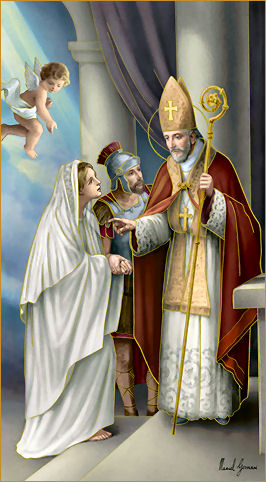
And the legends
The difficulty in tracing the story of Saint Valentine is that there was not one, but two. Little is known about the two Saint Valentine’s. One is said to have been a bishop from Terni in central Italy, the other a priest from Rome. Either way, one of the two was allegedly martyred on February 14, 269, whether a bishop from Terni or a Roman Priest, Saint Valentine, conducted clandestine weddings against the wishes of the Roman authorities in the 3rd century.
Saint Valentine was supposedly a Roman priest who performed secret weddings in the third century against the authorities’ wishes. He lived during the bloody reign of Roman emperor Claudius II, also known as Claudius the Cruel.
After being imprisoned in the home of a local notable, Valentine healed his captor’s blind daughter, reading the family to convert to Christianity. Before the Romans then tortured and decapitated him, he sent a note to the daughter, signed “your Valentine.” Curiously, as well as being the patron saint of lovers, Saint Valentine is also the patron saint of epileptics and beekeepers.
Some accounts say another saint named Valentine during the same period was the Bishop of Terni, also credited with secret weddings and martyrdom via beheading on February 14.
Chi era the Bishop of Terni, il vescovo cristiano morto a Roma il 14 febbraio 273?
San Valentino da Terni è stato vescovo, martire e santo, che secondo la leggenda nasce a Interamna Nahars nel 176 e muore a Roma il 14 febbraio 273. È considerato il patrono degli innamorati e, in suo onore, il 14 febbraio si celebra la famosa festa degli innamorati. San Valentino, dopo essersi convertito al Cristianesimo, viene ordinato Vescovo di Terni nel 197. Nel 270 si reca a Roma per predicare il Vangelo e cercare di convertire i pagani e nonostante il tentativo dell’imperatore Claudio II di convincerlo ad abiurare la propria fede, Valentino non solo rifiuta ma tenta di convertire l’imperatore stesso, che decide di non condannarlo a morte ma di affidarlo ad una famiglia nobile.
San Valentino viene invece arrestato sotto l’imperatore Aureliano mentre la sua popolarità aumentava in tutto l’impero. Catturato dai soldati romani che lo conducono lontano dalla città, subisce il martirio e la decapitazione per opera del soldato Furius Placidus, secondo gli ordini dell’imperatore Aureliano. Il suo corpo viene seppellito a Terni, nel luogo dove nel corso del IV secolo è poi stata costruita la basilica a lui dedicata e dove attualmente sono custodite le sue reliquie.
This legend also produces legends in itself.
Valentine was a popular name in ancient Rome, and different saints named by this name have similar stories. For example, we read that both healed a young person or child in prison, leading to a change of religion throughout the family. And all Valentines are executed on the same day of the year.
Saint Valentine allegedly was a Roman priest in the third century who performed secret weddings against the authorities’ wishes. Imprisoned in the home of a noble, he healed his captor’s blind daughter, causing the whole household to convert to Christianity and seal his fate. Before being tortured and decapitated on February 14, he sent the girl a note signed “Your Valentine.”
Sono molte le storie legate alla vita di San Valentino che hanno contribuito ad unire il suo nome con quello degli innamorati. Una di queste storie racconta che un giorno il santo incontrò due giovani che stavano litigando. Si avvicinò a loro con una rosa e li invitò a tenerla unita nelle loro mani, un gesto che li fece riconciliare subito. Secondo una variante della storia, invece, San Valentino avrebbe fatto tornare l’amore tra i due giovani facendo volare intorno a loro diverse coppie di piccioni. Da qui si sarebbe diffusa anche l’espressione “piccioncini” per riferirsi alle coppie di innamorati che si scambiano effusioni d’amore.
Un’altra storia racconta di come San Valentino, quando già era stato nominato Vescovo di Terni, abbia celebrato il matrimonio tra Serapia, giovane cristiana molto malata, ed il centurione romano Sabino. I genitori di Serapia non erano favorevoli al matrimonio, ma Valentino, chiamato dal soldato al capezzale della ragazza, avrebbe prima battezzato il centurione e poi celebrato le nozze. San Valentino è per questo considerato anche il protettore dei matrimoni.
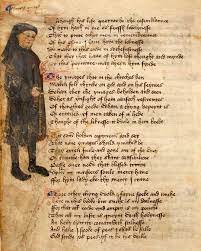
Middle Ages.
In the late fourteenth century, the English poet Geoffrey Chaucer penned “Parliament of Fowls” – which later became part of his celebrated work “The Canterbury Tales” – and introduced the association of romance to the legacy of Saint Valentine. Chaucer’s poem presents a dream vision where the narrator, upon falling asleep, is transported to a romantic realm, where he encounters an assembly (parliament) of birds, gathered in early spring to select their mates. Chaucer’s dreamlike narrative of nature, love, and desire occurs on “sent valentines day.”
So, how did Chaucer create the Valentine’s Day we know today? In the 1370s or 1380s, he wrote a poem called “Parliament of Fowls” that contains this line: “For this was on Saint Valentine’s Day, when every bird comes there to choose his mate.”
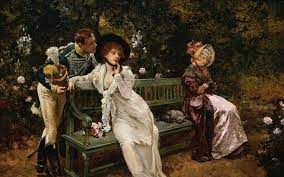
This was a moment in Europe when a particular set of romantic ideas took shape. Chaucer and other writers of his time celebrated romance between knights and nobles. By the 1400s, nobles inspired by Chaucer had begun writing poems known as “valentines” to their love interests. It was only at this point that stories started to appear linking Saint Valentine to romance.
By the 15th century, it became a celebration where lovers expressed their love by gifting each other flowers, offering sweets, and sending greeting cards, known as Valentine’s Day.
Whether or not Chaucer deserves full credit, he and fellow author Shakespeare indeed popularised the romantic associations of the day. People soon began writing and exchanging love letters to commemorate Valentine’s Day. Many of today’s commercialised Valentine’s Day traditions date back to the mid-19th century. Victorian men wooed women with flowers, and Richard Cadbury invented the first heart-shaped box of chocolates.

It’s not just about St. Valentine! Cupid—the winged baby boy frequently seen on Valentine’s Day cards and paraphernalia—is another symbol of this love-filled day. According to Roman mythology, Cupid was the son of Venus, the goddess of love and beauty. He was known for shooting arrows at gods and humans, immediately causing them to fall in love.
Chaucer’s depiction of Valentine’s Day as the moment when birds unite in pursuit of love serves as the reference point that has linked Valentine’s Day to romance in the present. Parliament of Fowls, it turns out, sparked a tradition.

Share: